Anaemia in Adults
Anaemia in Adults
Causes, Signs, and How to Prevent It
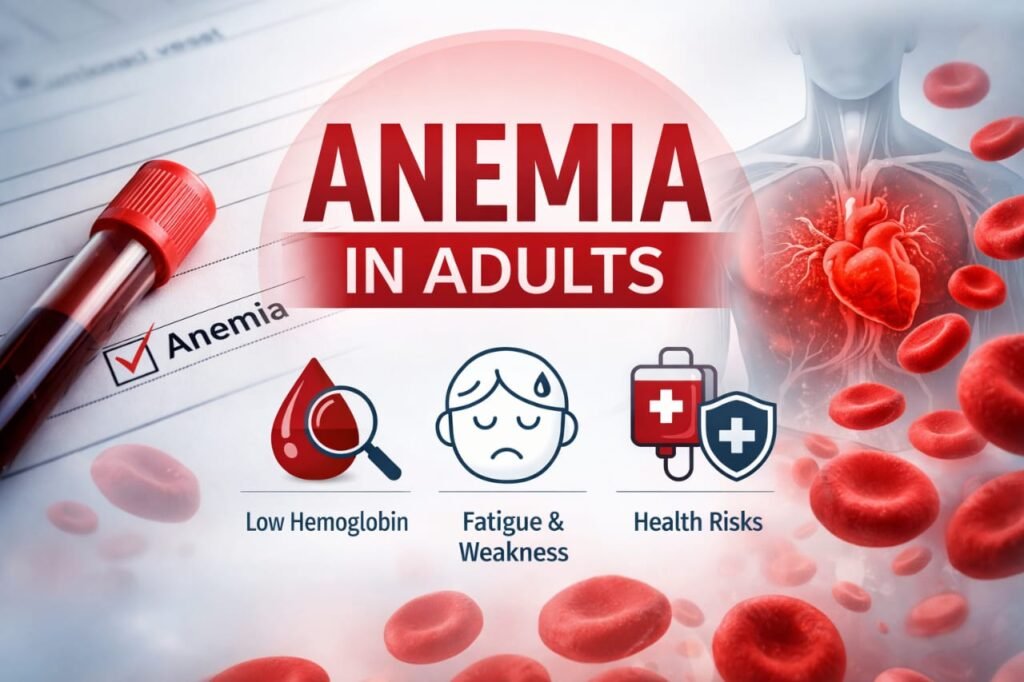
Anaemia is more than just feeling tired. It happens when your body doesn’t have enough healthy red blood cells or haemoglobin to carry oxygen efficiently. If left untreated, it can lead to serious health problems.
What is Anaemia?
Anaemia isn’t a single disease—it’s a condition with many possible causes.
It often develops slowly, so early signs like tiredness or pale skin may go unnoticed. Knowing the causes and symptoms can help you catch it early.
Why Adults Get Anaemia
1. Low Iron Levels
Iron is needed to make haemoglobin. Low iron can result from:
Heavy periods
Stomach or intestinal bleeding
Diets lacking iron-rich foods like meat, beans, or spinach
2. Vitamin B12 Deficiency
Vitamin B12 helps make red blood cells. Low levels can happen due to:
Poor diet
Digestive issues
Some medications
Warning signs: tingling, numbness, fatigue
3. Folate (Vitamin B9) Deficiency
Folate is important for healthy red blood cells. Causes of deficiency include:
Poor diet
Alcohol overuse
Certain medicines
4. Chronic Illness
Conditions like kidney disease, autoimmune disorders, or long-term infections can reduce red blood cell production.
5. Blood Loss
Losing blood through injury, surgery, heavy periods, or internal bleeding can lead to anaemia.
6. Inherited Conditions
Genetic issues like sickle cell anaemia or thalassemia affect red blood cell production and structure.
Common Symptoms to Watch For
Anaemia can start subtly but usually worsens over time:
Constant tiredness or weakness
Pale or yellow skin
Shortness of breath with small tasks
Dizziness or fainting
Rapid or irregular heartbeat
Cold hands and feet
Brittle nails or thinning hair
Difficulty concentrating or headaches
Risks if Anaemia is Ignored
Untreated anaemia can cause:
Heart problems, including enlarged heart or heart failure
Weak immunity, leading to more infections
Low energy and poor performance at work or home
Complications during pregnancy
Nerve or brain problems in severe B12 deficiency
How to Prevent and Manage Anaemia
Eat Right
Iron-rich foods: lean meat, lentils, spinach, fortified cereals
Vitamin C: oranges, bell peppers, tomatoes (helps iron absorption)
Vitamin B12: eggs, milk, fortified plant-based foods
Folate: leafy greens, beans, avocados
Healthy Habits
Stay hydrated
Do moderate exercise
Avoid excess alcohol
Don’t skip routine health check-ups
Practical Tips for Adults with Anaemia
Do:
Take supplements only if recommended by a doctor
Eat small, frequent, nutrient-rich meals
Rest well and manage stress
Track your symptoms
Don’t:
Self-prescribe high-dose supplements
Ignore persistent tiredness or paleness
Skip blood tests or doctor visits
Rely only on home remedies for severe anaemia
When to See a Doctor
See a healthcare professional immediately if you notice:
Extreme or ongoing fatigue
Pale or yellowish skin
Rapid heartbeat, dizziness, or shortness of breath
Blood in stool or urine, or unexplained bruising
Tingling, numbness, or other nerve symptoms
Key Takeaway
Anaemia is more than low energy—it can signal serious health issues. A balanced diet, healthy lifestyle, and timely medical care can prevent complications and keep your energy and health at their best.